Problem:
There remains a huge chasm in granular evidence on user preferences and trade-offs in digital payments, constraining effective product design and market segmentation.Understanding the barriers that vulnerable groups face is therefore a critical step toward advancing their inclusion in digital payments systems.
Rapid growth in mobile money and digital payment infrastructure across emerging markets is associated with expanding adoption and increasing use of digital merchant payments, with observable variation across merchant and customer segments. This highlights the importance of understanding the behavioural, structural, and contextual factors that shape uptake and usage.
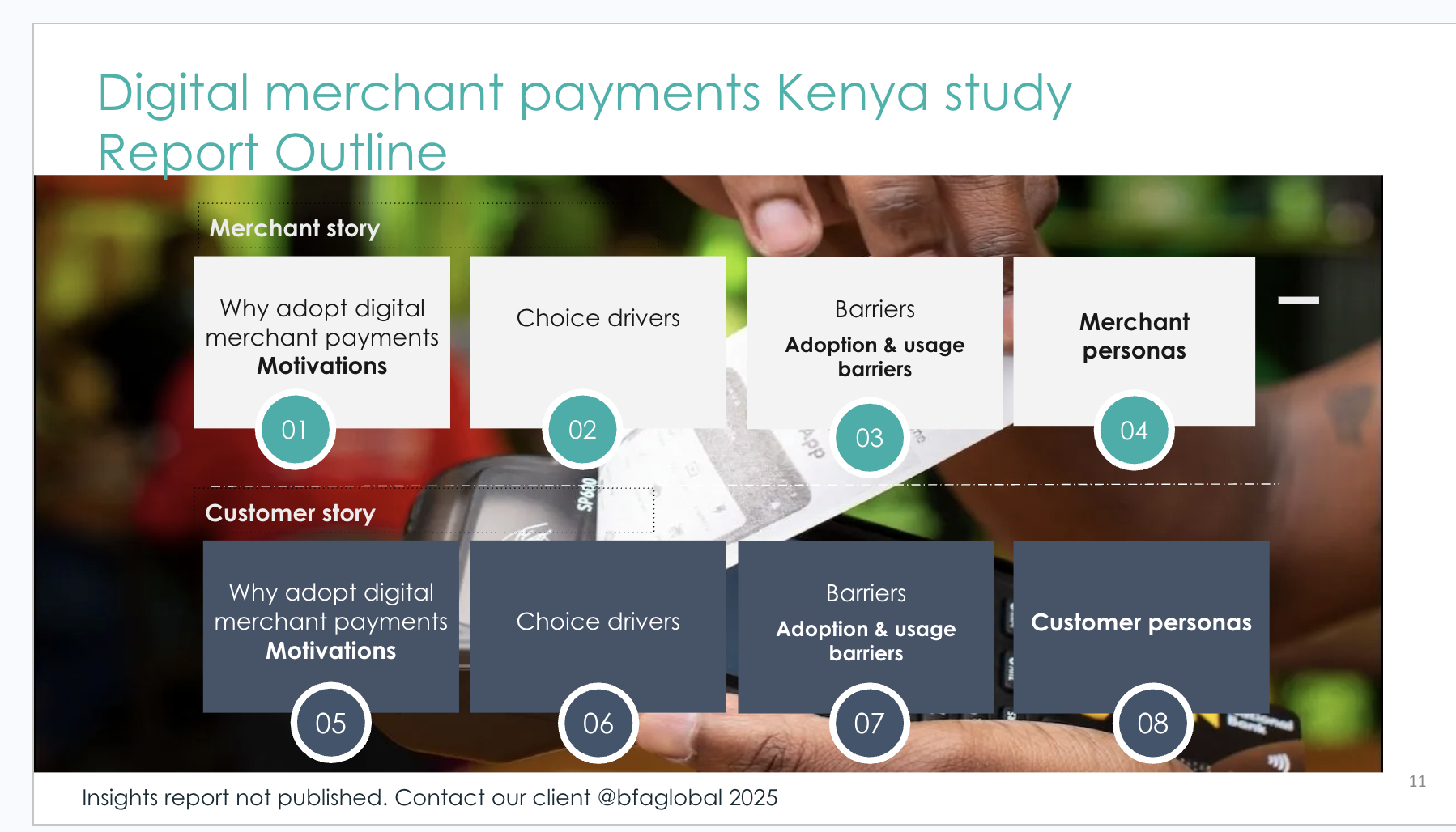
A human-centred, mixed-methods approach was applied, combining qualitative research methods such as in-depth interviews, field observations, and journey mapping across diverse merchant and customer segments. Insights were synthesised into personas and segmentation frameworks to translate behavioural evidence into actionable inputs for product design, service optimisation, and ecosystem strategy.
Solution/Outcome:
Applying economics-based conjoint analysis,and behavioural economics we conducted two country studies in Kenya and Nigeria. We combined international thematic expertise, local research partnerships, and field networks to generate user-level insights across diverse segments. Provided country level and cross-country thematic insights reports.